E-Bikes & E-Motos
E-Bikes
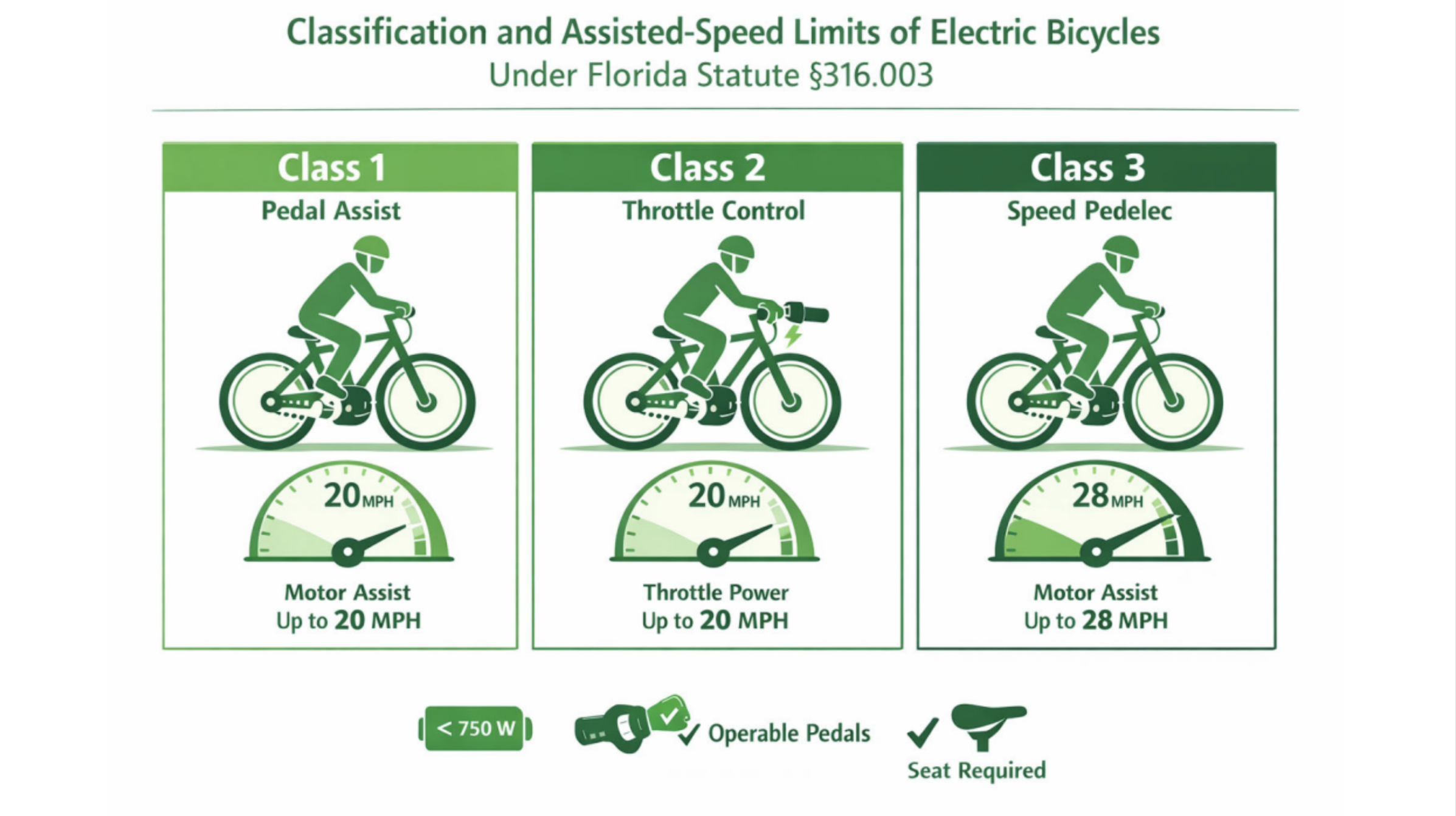
All three classes of e-bikes are recognized under Florida law. E-bikes are not required to be registered and do not have licensing requirements under state law, but you should always check your local municipal ordinances for special rules.
Special Rules for E-Bikes
Riders operating an e-bike on a sidewalk or in an area designated for pedestrians would be barred from exceeding 10 miles per hour if a pedestrian is within 50 feet.
E-bikes on shared pathways not adjacent to roadways must yield to pedestrians and provide an audible signal before passing. This includes paths in parks and recreational areas.
E-Motos
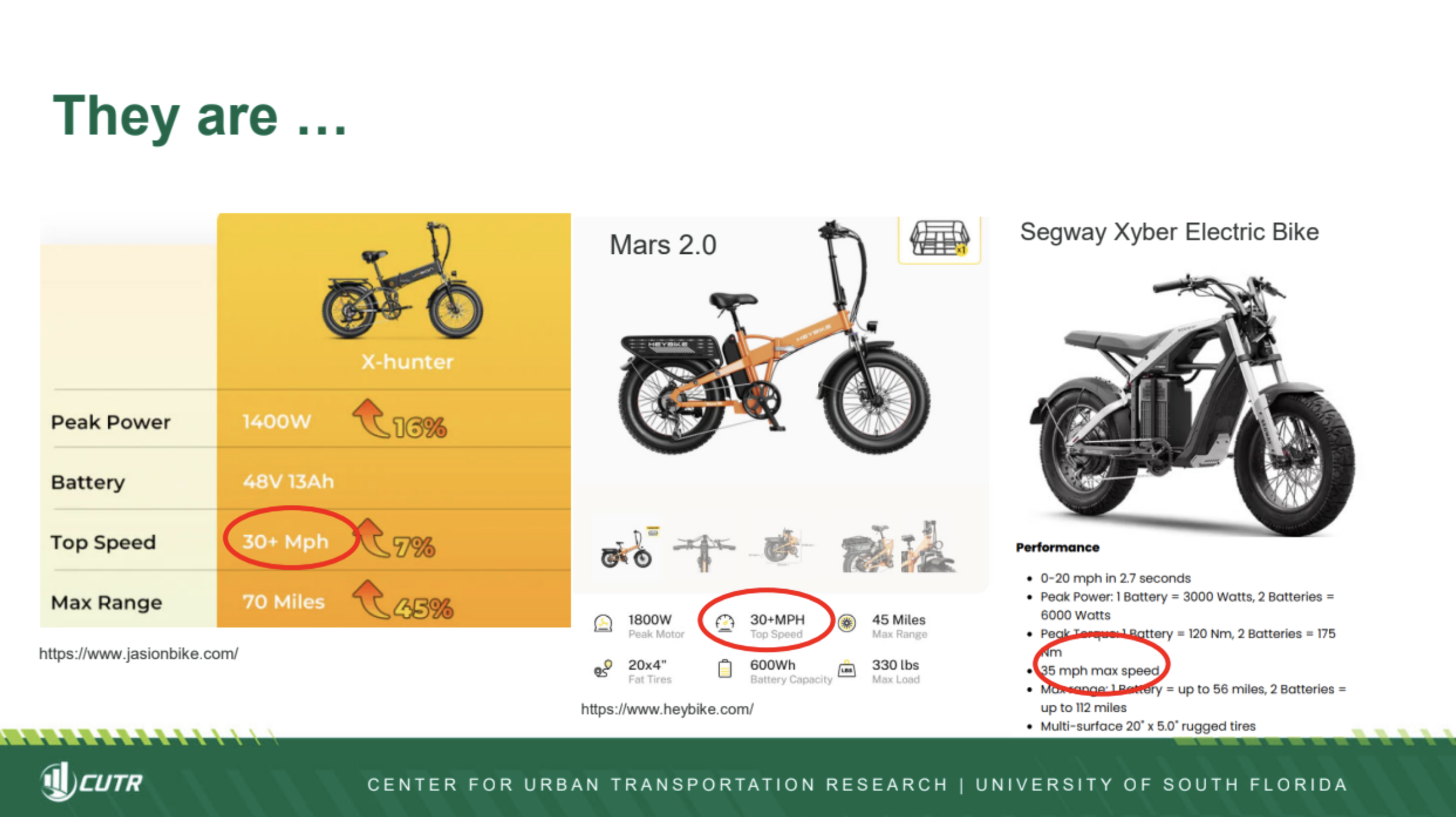
An e-moto is NOT considered an e-bike and is banned from all areas outside of private property (i.e., these are not street or park legal).
E-motos are electric mopeds, electric motorcycles and electric dirt bikes that are much more powerful and faster than any electric bicycle. E-motos may have motors with thousands of watts of power that far exceed the 750 watts allowed for a legal electric bicycle. They are equipped with throttles and typically can go in excess of 30 miles per hour, faster than any electric bicycle is capable of traveling. Some E-motos can achieve highway speeds of 65 miles per hour. If your “e-bike” does not have operational pedals it is an e-moto - many of these are sold as children’s toys.
E-moto’s currently are not eligible for motorcycle registration with the department of motor vehicles, and therefore are not street legal.
What does an e-moto look like?
Hint: All of these are. Most important is the speed capability.